
For most of the last decade, the CMO-CIO relationship was a scheduling formality a quarterly check-in to align on tooling budgets and not much else. That’s no longer a defensible posture. Forrester’s research heading into 2026 found that the strongest predictor of which companies successfully scale AI in marketing isn’t budget size or headcount. It’s the strength of the relationship between the CMO and the CIO.
That finding reframes a relationship most companies treated as administrative into something closer to a strategic asset. Marketing has become one of the primary entry points for AI inside most companies, and AI initiatives live or die on data quality and infrastructure decisions that sit squarely on the CIO’s side of the org chart.
It’s a finding that should change how marketing leaders think about their own role, too. A CMO who treats data infrastructure entirely as “someone else’s problem” is, by Forrester’s own framing, working against the single factor most closely associated with successful AI scaling regardless of how strong the marketing strategy itself is.
Quick Takeaway
- Forrester research identifies a strong CMO-CIO relationship as a defining trait of companies successfully scaling AI in marketing more predictive than budget or team size. The reason is structural: AI initiatives depend on data readiness and the right tooling decisions, both of which sit with IT, while the strategic direction and use cases sit with marketing. Companies that treat this as one shared initiative outperform those running it as two separate workstreams that occasionally sync.
What the CMO-CIO Relationship Actually Involves
At a practical level, the relationship covers a small number of decisions that determine whether marketing’s AI ambitions are achievable at all: what data is clean and accessible enough to use, which tools get approved and integrated, what security and governance guardrails apply, and how quickly new capabilities can actually be deployed once marketing decides it wants them. None of those are purely marketing decisions or purely IT decisions they require both functions making calls together, repeatedly, not in a single annual planning meeting.
It’s worth being specific about why this differs from the general advice to “break down silos” that shows up in most leadership commentary. The CMO-CIO relationship isn’t about generic collaboration it’s about a defined, recurring set of joint decisions that have direct, measurable consequences for how quickly and how well marketing’s AI initiatives actually perform.
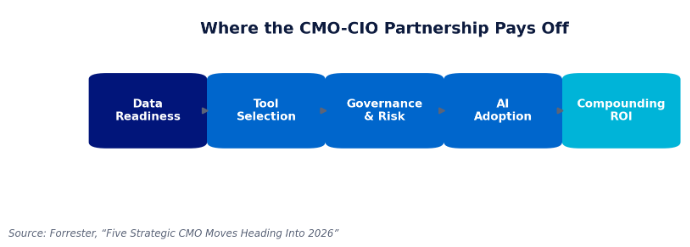
Figure 1: Where the CMO-CIO partnership creates the most leverage.
Why This Partnership Became Strategic Rather Than Operational
Marketing’s adoption of AI tools has outpaced most companies’ data infrastructure, which is exactly the gap that makes the CMO-CIO relationship suddenly consequential. A marketing team can license the most capable AI tools available, but if customer and account data lives in disconnected systems with inconsistent formatting, the tools will produce mediocre results regardless of their underlying sophistication. Fixing that is fundamentally an IT-led data architecture problem, not a marketing tooling decision which means the CMO needs an actively engaged CIO partner, not just informed after the fact.
Forrester’s research also points to a second layer: top AI adopters tend to have their data foundations in order before they scale AI initiatives, treating data readiness as a prerequisite project rather than something to fix in parallel with rollout. That sequencing decision is exactly the kind of call that requires CMO and CIO alignment well before a single AI tool gets purchased.
Where the CMO-CIO Relationship Pays Off Most
The payoff shows up concretely in a handful of areas: faster, more confident tool selection because both functions vet a purchase together instead of marketing buying and IT discovering it later; stronger data governance because security and compliance requirements are built in from the start rather than retrofitted; and meaningfully faster time-to-value on new AI capabilities because the infrastructure to support them was already in place when marketing was ready to move.
There’s a compounding effect worth noting as well. Each successful joint decision tends to make the next one easier, because trust and shared vocabulary build up between the two functions over time. Companies that start this relationship from a place of mutual suspicion, by contrast, tend to see every individual AI initiative slowed down by the same renegotiation of basic ground rules.
A Framework for Building the Partnership Deliberately
Few companies build this relationship by accident it requires a deliberate operating rhythm. The table below outlines what that can look like in practice.
| Cadence | Focus | Output |
| Quarterly | Joint roadmap review across marketing and IT priorities | Shared, prioritized list of upcoming initiatives |
| Monthly | Data readiness check-in for active and upcoming AI projects | Early flag on data quality issues before they block a launch |
| Per major tool decision | Joint evaluation before procurement, not after | Tools that are both effective and properly integrated from day one |
| Ongoing | Shared dashboard or reporting view both functions trust | One version of the truth instead of competing data sets |
Mistakes That Keep CMOs and CIOs Working in Silos
Even companies that recognize that this relationship matters often undermine it out of habit. Common patterns include:
These habits tend to persist even after a company explicitly commits to better alignment because they’re built into existing budget cycles and reporting structures that no one has gone back to redesign to reflect the new priority.
- Marketing purchasing AI tools independently and looping IT in only at the integration stage
- Treating data governance as a compliance checkbox rather than a shared strategic priority
- Scheduling alignment only at the annual budgeting cycle instead of an ongoing cadence
- Letting tool sprawl accumulate because no one owns the joint decision to consolidate
- Measuring success separately marketing on campaign metrics, IT on uptime with no shared scorecard for AI initiatives specifically
THP’s Take: Data Readiness Is a Relationship Problem First
THP Studio Perspective
- We’ve seen marketing teams buy genuinely excellent AI tools and get underwhelming results, almost always because the data feeding those tools was never properly prepared — a data problem that’s really an organizational one. The CMO-CIO relationship determines whether that preparation happens before a tool launch or gets discovered the hard way after one. Treat the relationship as infrastructure, not etiquette.
- If there’s one practical change we’d recommend first, it’s this: before approving the next AI tool purchase, put the CIO or equivalent technology leader in the room for that conversation, not just the rollout that follows it.
Frequently Asked Questions
Key Takeaways
- Forrester research identifies the CMO-CIO relationship as a stronger predictor of AI success in marketing than budget or team size.
- The relationship matters because AI initiatives depend on data readiness and infrastructure decisions that sit with IT, paired with strategy that sits with marketing.
- Top AI adopters get their data foundations in order before scaling initiatives, rather than fixing data problems in parallel with rollout.
- Build the partnership on a deliberate cadence quarterly roadmap reviews, monthly data check-ins, and joint tool evaluation before purchase.
- Treat data readiness as a relationship and organizational issue first, not purely a technical one.
Work With THP’s Technology & Martech Studio
- THP’s Technology & Martech Studio works across marketing and IT to build the data architecture and integration foundation AI initiatives actually need the work that has to happen before a new tool can deliver on its promise. If that handoff between marketing and IT has been informal so far, this is where we’d help formalize it.
Author