
Executive ghostwriting often has an image problem within the companies that need it most. Ask a founder if they want a ghostwriter, and many interpret it as an implication that they cannot write, or worse, that the content will not truly be their own. While that reaction is understandable, it is usually misplaced. Many of the CEOs publishing the most credible B2B thought leadership today are not writing every word themselves. Instead, they spend thirty focused minutes sharing their ideas with someone whose job is to capture their thinking and turn it into content that sounds unmistakably like them.
The real constraint on executive content is not writing talent. It is time. Most leaders have strong opinions and valuable insights, but very little room in their schedules to sit down and write a 1,500-word article. Executive ghostwriting solves the right problem by turning conversations that busy executives already want to have into content assets the marketing team can publish and scale.
It is worth defining the practice clearly because the term “ghostwriting” often carries more stigma than it deserves. Speechwriters have long helped political leaders communicate their ideas, and executive ghostwriting in B2B follows a similar model. The writer helps structure and draft the content, while the executive reviews, edits, and approves every claim before it is published under their name.
Key Takeaways
- Executive ghostwriting works when it’s treated as structured interviewing, not invisible writing. A single well-run 30-minute conversation with a CEO, properly captured and repurposed, can generate a bylined article, a LinkedIn series, a sales deck quote, and a newsletter feature — without adding a single hour to that executive’s calendar. The skill that matters most isn’t prose style. It’s asking the right questions to surface an opinion specific enough to be worth publishing.
What Executive Ghostwriting Actually Involves
Executive ghostwriting is the practice of a writer interviewing a company leader, then drafting content in that leader’s voice and under their byline. When done well, the executive reviews and approves every word before it publishes. The writer’s job is to capture the thinking accurately, not to invent opinions the executive doesn’t hold.
The format scales far beyond a single article. One structured interview, when used effectively, can generate five or more content assets across multiple formats. This is why executive ghostwriting has become one of the highest-leverage activities in a content calendar for busy leadership teams.
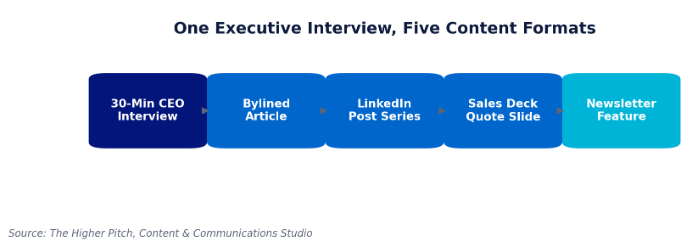
Figure 1: How one executive ghostwriting interview becomes five content formats.
Why CEOs Resist Ghostwriting (And Why That’s the Wrong Instinct)
The hesitation usually comes down to authenticity, with many leaders worrying that a ghostwritten piece won’t sound like them or that readers will somehow know. In practice, the opposite is often true. Most executives are far better at expressing strong opinions in conversation than they are at turning those ideas into a structured, publishable article from a blank page. A skilled ghostwriter’s real job is to remove the blank-page problem while preserving the executive’s voice.
The brands that get this right treat the executive’s time as the scarce resource to protect and the writer’s time as the resource to spend generously on structure, drafts, and revisions. That trade is almost always a good one for a leader with twenty other priorities that week.
The 30-Minute Interview That Becomes a Quarter of Content
The math behind ghostwriting’s leverage is straightforward once you see it laid out. A focused 30-minute interview, recorded and transcribed, typically yields enough specific material for a 1,200-word bylined article, three to five LinkedIn posts built around individual points, one quotable slide for a sales deck, and a feature in the company newsletter. That’s roughly five working assets from one short conversation, repeated on a recurring cadence rather than treated as a one-off project.
The repurposing only works, though, if the original interview produced specific enough material to repurpose. A vague, high-level conversation about “the future of the industry” tends to yield one mediocre article and nothing else worth pulling out. A conversation anchored in a real client situation, a specific number, or a named disagreement yields a transcript a writer can mine for weeks.
A Working Framework for the Interview Itself
The quality of every downstream asset depends entirely on the quality of the original interview. The framework below distinguishes a usable transcript from a forgettable one.
Mistakes That Make Ghostwritten Content Feel Fake
Most ghostwriting failures are not caused by poor writing quality. They happen because of process mistakes that remove the elements that made the original conversation valuable and engaging. Ironically, these mistakes often occur when teams try to protect the executive by making the content safer and less likely to spark disagreement. When taken too far, this approach results in generic, forgettable content that B2B audiences are quick to scroll past
- Editing out the executive’s specific phrasing in favor of generic corporate language during review
- Skipping the interview entirely and drafting from old press materials or a brand style guide
- Removing a genuinely contrarian point because legal or brand teams find it “too strong”
- Publishing without the executive reading the final draft aloud, which is the fastest way to catch a sentence that doesn’t sound like them
- Treating ghostwriting as a one-time project instead of a recurring interview cadence
THP Studio Perspective
- We’ve found that the executives who get the most value from ghostwriting are not always the most naturally articulate. Instead, they are the ones willing to commit to a recurring fifteen-minute conversation every couple of weeks. Consistent voice and quality come from repetition and a writer who understands how the executive actually speaks, not from finding a single exceptionally talented writer. The most successful teams treat executive ghostwriting as an ongoing system rather than a one-time deliverable.
- The other thing we’d add: the writer’s job isn’t to make the executive sound smarter than they are. It’s to make them sound exactly as smart as they actually are, on a topic they already know cold, without the friction of a blank page getting in the way.
Frequently Asked Questions
Key Takeaways
- Executive ghostwriting solves a time problem, not a writing-talent problem most leaders have strong opinions and no spare hours to draft them.
- One structured 30-minute interview can realistically produce five content assets: a byline, several LinkedIn posts, a sales deck quote, and a newsletter feature.
- The interview itself determines content quality: push past rehearsed talking points toward specific examples and real tension.
- The most common failure mode is over-editing the executive’s actual phrasing into generic corporate language during review.
- Treat ghostwriting as a recurring cadence. Even one well-run interview per quarter can compound into a consistent and recognizable executive voice over the course of a year.
Work With THP’s Content & Communications Studio
THP’s Content & Communications Studio runs structured executive ghostwriting programs end to end interview, draft, repurposing, and the editorial calendar that keeps a leader’s voice consistent across every format. If your CEO has opinions and no time, that’s the entire premise of this service.
Author