
Traditional account-based marketing asks a team to pick three to five high-value accounts months before any of them shows real buying intent, then build a personalized campaign and wait. It’s a sound strategy, and it’s also slow which is exactly the gap deal-based ABM is built to close. Instead of starting with a hand-picked account list, deal-based ABM starts with deals already moving through the pipeline and wraps marketing support around them in real time.
The distinction matters more than it might seem. Deal-based ABM isn’t a smaller version of traditional ABM it’s a different entry point into the same discipline, built for marketing teams that want to show pipeline impact in weeks rather than a full quarter.
It also tends to resolve a recurring tension between sales and marketing leadership: sales wants help with deals that are already real, while marketing has often been measured on building pipeline for accounts that may take a year or more to convert. Deal-based ABM gives marketing a way to contribute directly to deals sales already cares about today, not just accounts marketing hopes will matter eventually.
Quick Takeaway
- Deal-based ABM targets accounts that are already in active sales conversations, rather than a static list assembled before any buying signal exists. It’s lighter to run, faster to show results, and works well alongside traditional, long-cycle ABM rather than replacing it. The core shift is timing: marketing engagement starts mid-funnel, where a deal already exists, instead of pre-funnel, where a hoped-for deal might eventually appear.
What Deal-Based ABM Actually Is
Deal-based ABM is a lighter, more tactical version of account-based marketing that targets live deals already in the sales pipeline, rather than a static list of accounts chosen before any buying intent has been confirmed. Where traditional ABM often invests in a small number of named accounts for months at a time, deal-based ABM activates the moment a sales rep flags a real, qualified opportunity and stops investing the moment that deal closes or stalls.
It’s a meaningfully different operating model, not a smaller-budget version of the same one. Traditional ABM bets on a hypothesis about which accounts will eventually buy. Deal-based ABM responds to evidence that a specific account already is.
The naming convention itself is a useful clue to the mindset shift: traditional ABM organizes around a noun (the account), while deal-based ABM organizes around an event (the deal). That changes the trigger for marketing involvement from a strategic planning decision to a real-time signal from the sales pipeline.
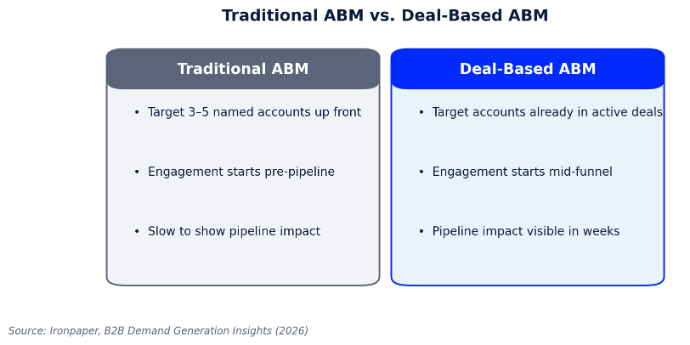
Figure 1: Traditional ABM compared with deal-based ABM.
Why Traditional ABM Feels Too Slow for Many Teams
Traditional ABM has a structural patience requirement that doesn’t fit every team’s pressure to show results. Building out personalized content, ads, and outreach for a hand-picked account list takes real lead time, and the payoff, a closed deal from one of those accounts can be months away even when the program is working exactly as designed.
That timeline creates a familiar tension for marketing leaders defending budget: the program might be working, but there’s little to show for it yet. Deal-based ABM sidesteps that problem by attaching marketing effort to deals that are already moving, which means the time between activity and visible pipeline impact shrinks from a quarter to a matter of weeks.
How Deal-Based ABM Changes the Targeting Logic
The targeting question shifts from “which accounts should we bet on” to “which deals already in motion need help closing.” That second question is easier to answer because the evidence already exists inside the CRM, a qualified opportunity, a multi-stakeholder buying committee starting to engage, a deal that’s stalled at a specific stage. Marketing’s job becomes building the specific asset, ad, or outreach sequence that addresses exactly where that one deal is stuck, rather than producing generic account-level content months in advance of any confirmed opportunity.
This also changes how marketing teams talk to sales. Instead of asking sales to trust a strategic account list assembled without their input, marketing is responding directly to a problem a rep has already flagged, which tends to build a faster, more collaborative working relationship between the two functions than a top-down account selection process usually does.
A Practical Framework for Running a Deal-Based Play
Deal-based ABM runs on a tighter, more reactive cycle than traditional ABM. The table below outlines the core stages.
| Stage | Trigger | Marketing Action |
| 1. Flag | Sales marks a deal as qualified and stalled or at risk | Marketing reviews the specific blocker with the rep |
| 2. Build | A clear gap is identified (e.g., no economic buyer engaged) | Build one targeted asset addressing that exact gap |
| 3. Activate | Asset is ready | Deploy directly to the buying committee via ads, email, or LinkedIn |
| 4. Close the loop | Deal closes or stalls further | Log outcome to refine which plays actually move deals |
Mistakes That Turn Deal-Based ABM Into Just Retargeting
Deal-based ABM only works as a strategy if it stays genuinely targeted to a specific deal’s needs. Watch for these failure patterns:
Most of these mistakes happen when marketing treats “deal-based” as a label rather than an operating discipline running the same generic plays as always, just with a deal name attached to the spreadsheet row instead of an account name.
- Running generic retargeting ads against everyone in a deal’s account and calling it deal-based ABM
- Skipping the conversation with sales about exactly where a deal is stuck before building anything
- Treating every stalled deal the same way instead of diagnosing a distinct blocker for each one
- Measuring activity (impressions, clicks) instead of the only metric that matters, did the flagged deal move forward
- Running deal-based ABM in isolation with no sales involvement, which removes the real-time signal the entire model depends on
THP’s Take: Deal-Based ABM Is a Complement, Not a Replacement
THP Studio Perspective
- We don’t position deal-based ABM as a replacement for longer-cycle, named-account ABM the two solve different problems. Deal-based ABM is the fast-response layer that shows pipeline impact quickly and keeps sales engaged with marketing. Traditional ABM is the longer-term investment in accounts that aren’t showing buying signals yet but represent real strategic value. Most B2B teams need both running at once, not a choice between them.
If we had to pick a starting point for a team with no ABM program at all, though, we’d usually start with deal-based plays. The faster feedback loop builds internal credibility for the broader ABM investment that follows.
Frequently Asked Questions
Key Takeaways
- Deal-based ABM targets accounts already in active sales conversations, rather than a hand-picked list chosen before buying intent exists.
- It solves the patience problem in traditional ABMs, showing pipeline impact in weeks rather than over a full quarter.
- Targeting logic shifts from predicting which accounts will buy to responding to deals already confirmed to be moving.
- Run it on a tight cycle: flag a stalled deal, build a targeted asset for its specific blocker, activate it, and measure deal movement.
- Deal-based ABM complements rather than replaces traditional ABM most teams benefit from running both at once.
Work With THP’s Campaigns & Demand Generation Studio
- THP’s Campaigns & Demand Generation Studio runs deal-based ABM alongside longer-cycle account programs, built around a tight feedback loop with your sales team. If pipeline reviews keep surfacing stalled deals marketing could help unstick, that’s exactly where this play starts.
Author