
There was a time when a B2B CEO could avoid the press, skip LinkedIn entirely, and still build a credible company. The product and the sales team carried the brand. That era is over, and the shift isn’t coming from marketing departments pushing their executives to self-promote. It’s coming from buyers. Research on B2B tech purchasing now puts a specific number on it: 86% of buyers shortlist only vendors they had already heard of before they ever entered a formal evaluation process.
That statistic is the entire argument for why executive visibility has moved from a nice-to-have to a board-level expectation. If a buyer has never encountered your company or its leadership before the RFP stage, you’re not being evaluated on merit. You’re not being considered at all.
It’s a particularly uncomfortable statistic for companies that have historically relied on product quality alone to win deals. A genuinely excellent product with an invisible leadership team is now competing on worse terms than a merely good product backed by executives buyers already recognize and trust before a single sales call happens.
Quick Takeaway
- Executive visibility has shifted from optional personal branding to a board-level expectation, driven by buyer behavior rather than marketing preference. With 86% of B2B buyers shortlisting only vendors they’d already heard of before entering a formal evaluation, visibility built before the RFP stage directly determines who even gets considered. A real program goes beyond a personal LinkedIn habit. It requires media training, a consistent point of view, and a deliberate cadence, treated with the same rigor as any other growth initiative.
What Executive Visibility Actually Means
Executive visibility is the deliberate, sustained practice of putting company leadership in front of the audiences that influence a buying decision: media, industry analysts, conference stages, and platforms like LinkedIn, well before any of those buyers enter an active evaluation process. It’s distinct from occasional press mentions or sporadic personal LinkedIn posts. A real program has a defined cadence, a consistent point of view, and specific channels chosen deliberately rather than whatever opportunity comes up.
The word “deliberate” is doing a lot of work in that definition. A CEO who occasionally gets quoted in the press because a journalist happened to reach out has visibility in the loosest sense, but not a program. There’s no consistent message, no planned cadence, and nothing repeatable that a communications team can build on for the next quarter.
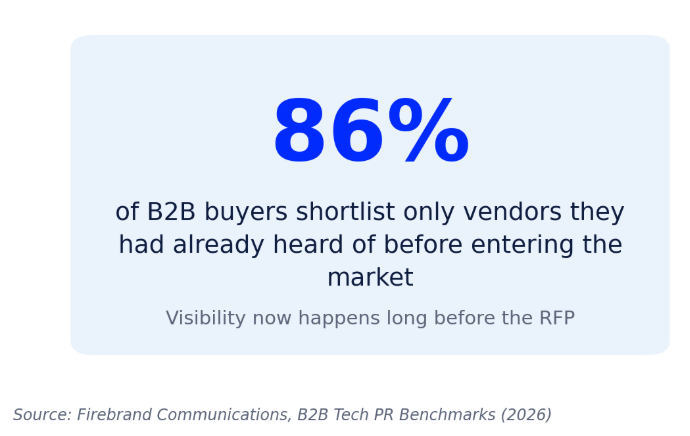
Figure 1: Why pre-RFP visibility now determines who makes a buyer’s shortlist.
Why Boards Now Expect It Rather Than Tolerate It
Boards have started treating executive visibility as a growth lever rather than a personal indulgence, largely because the connection to pipeline has become measurable rather than anecdotal. Industry communications research now tracks specific outcomes, including inbound media requests, conference speaking invitations, analyst engagement, and pipeline influence tied directly to executive visibility activity, which gives boards a basis to ask why a program doesn’t exist, the same way they’d ask about any other underused growth channel.
There’s also a competitive dynamic at play. As more category leaders build out genuine executive visibility programs, the absence of one starts to read as a signal in itself. A company that isn’t visible ahead of the RFP increasingly looks like a company that wasn’t considered, rather than one that simply opted out of self-promotion.
The Buyer Behavior Behind the Shift
The underlying buyer behavior is straightforward: B2B purchases are high-stakes and high-risk for the person making the recommendation internally, so buyers default to vendors that already feel familiar and credible rather than starting a formal evaluation from a position of total unfamiliarity. A buyer who has seen a CEO speak credibly on a panel, read a sharp bylined article, or noticed a company consistently quoted in trade press arrives at the RFP stage already predisposed to trust that vendor. An equally capable but invisible competitor has to win that trust from zero, inside a compressed evaluation window.
This dynamic compounds across a buying committee, not just with a single decision-maker. When several stakeholders on the same buying committee have independently encountered a company’s leadership before the evaluation starts, the internal conversation shifts from “who is this vendor” to “why should we pick them over the other familiar option,” which is a fundamentally easier sales conversation to win.
A Framework for Building a Real Visibility Program
A credible executive visibility program has a small number of consistent components, laid out in the table below.
| Component | What It Involves | Cadence |
| Media training | Preparing the executive to give clear, quotable answers under real questioning | Once, then refreshed before major moments |
| Point of view | A small number of consistent, defensible positions the executive returns to | Established early, repeated consistently |
| Media relations | Proactive pitching to relevant trade press and journalists | Ongoing, tied to news and commentary opportunities |
| Speaking and analyst engagement | Conference panels, briefings with industry analysts | Quarterly planning, opportunistic execution |
Mistakes That Make Executive Visibility Look Performative
Executive visibility backfires when it’s built on activity instead of substance. Watch for these patterns:
Buyers researching a potential vendor are unusually good at spotting the difference between a leader with something specific to say and one who is simply present on every channel. The mistakes below are exactly what creates that impression of presence without substance.
- Posting frequently on LinkedIn with no consistent point of view behind any of it
- Accepting every speaking invitation regardless of audience relevance, diluting the executive’s time and message
- Skipping media training and then under-delivering in front of a journalist or analyst who was genuinely interested
- Treating visibility as a one-person initiative instead of building a small bench of credible spokespeople across the leadership team
- Measuring visibility in vanity metrics like follower counts instead of inbound interest, analyst engagement, or pipeline influence
THP’s Take: Visibility Has to Survive Contact With Substance
THP Studio Perspective
- The visibility programs that actually shorten sales cycles share one trait: the executive has something specific to say, and the program exists to get that specific thing in front of the right people consistently. Visibility built purely on frequency and channel presence, with no real point of view behind it, tends to read as noise rather than credibility. Buyers are increasingly good at telling the difference.
- Our advice to leadership teams starting this work: settle on the point of view first, in a single working session if needed, before booking a single media interview or speaking slot. Visibility built on top of a clear position compounds. Visibility built on top of nothing in particular just adds activity to a crowded feed.
Frequently Asked Questions
Key Takeaways
- 86% of B2B buyers shortlist only vendors they had already heard of before entering a formal evaluation, making pre-RFP visibility a direct factor in who gets considered.
- Boards now expect executive visibility because its connection to the pipeline has become measurable rather than anecdotal.
- A real program combines media training, a consistent point of view, proactive media relations, and deliberate speaking and analyst engagement.
- Visibility built on frequency alone, without a specific point of view, tends to read as noise rather than credibility.
- Build a small bench of credible spokespeople across leadership, rather than concentrating the entire program on one executive.
Work With THP’s PR & Media Profiling Studio
- THP’s PR & Media Profiling Studio builds executive visibility programs around a real point of view, media training, proactive press relations, and a speaking and analyst cadence designed to build pre-RFP familiarity with the buyers who matter. If your leadership team is invisible before the deal cycle starts, that’s the gap this studio closes.
Author