
A difficult conversation is happening inside a lot of B2B marketing teams right now. The monthly analytics report shows website traffic dropping. The team has not changed anything obvious. Rankings are broadly holding. There are no major technical errors flagged. But the visitor numbers keep declining, and explaining that trend to leadership without a clear cause is uncomfortable.
Here is the context that makes the conversation easier: almost every B2B company is experiencing some version of this. The causes are structural, not team-specific. And critically, not all of the decline represents a problem. Some of it represents a shift in how the value of digital content shows up, with a growing portion of that value landing in a place that traditional traffic analytics does not capture.
That is not a comfortable statement to lead a board update with, and this article is not going to suggest you pretend the traffic drop does not matter. It does matter, and there are legitimate cases where declining traffic signals a real problem that needs fixing. But there is also a meaningful portion of current B2B traffic decline that is a rational market response to a changed discovery environment, and teams that understand the difference will make better resource allocation decisions than teams that treat all traffic decline as equally alarming.
Quick Takeaway
- B2B website traffic is declining broadly in 2026, driven by three structural forces: AI-generated answers satisfying research queries without a click, Google’s AI Overviews reducing click-through rates from informational searches, and buyer research behavior shifting earlier in the journey to channels like LinkedIn and AI tools that do not route to websites. Some traffic decline is a warning sign requiring action. Some is a rational outcome of a changed discovery environment, and the response to each is different.
Website Traffic Dropping: The Number That Has Everyone Nervous
Organic search traffic across B2B websites has declined meaningfully over the past 18 months, with the steepest drops in informational content. Pages built to answer research questions, “what is ABM,” “how does intent data work,” “what to look for in a CDP,” are seeing lower click-through rates even when their rankings are stable. In some cases, rankings have actually improved while traffic declined, which is the specific pattern that reveals zero-click dynamics at work rather than a loss in search performance.
The industry benchmark context: click-through rates from Google search have been declining steadily as featured snippets, AI Overviews, and AI-powered search features satisfy more queries without requiring a click. For purely informational queries, this effect is most pronounced. For commercial and transactional queries, where a buyer is actively evaluating vendors or looking for pricing, the effect is less severe and the traffic that does arrive tends to be higher intent.
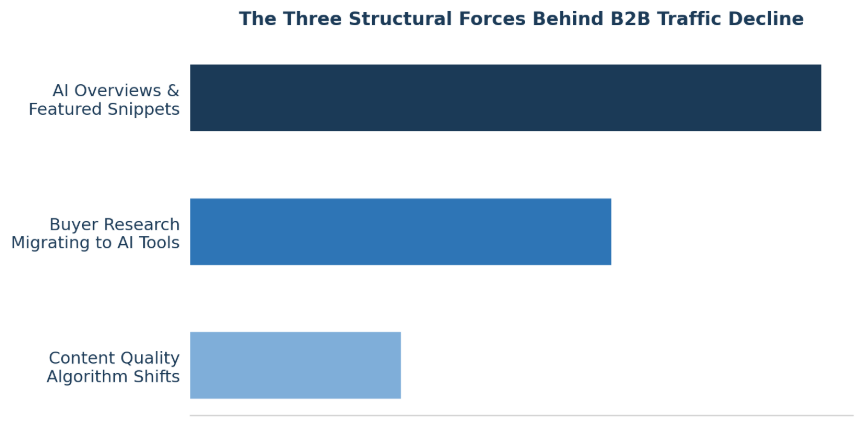
Figure 1: The three structural forces behind B2B organic traffic decline in 2026.
The Three Causes Behind B2B Traffic Decline
Understanding which force is driving a specific site’s traffic decline determines what the appropriate response is. Most sites are seeing a combination of all three, in different proportions depending on their content mix.
Cause 1: AI Overviews and Featured Snippets Answering Informational Queries When Google places an AI-generated summary at the top of a search results page, a meaningful share of users who would previously have clicked through to read a full article get a sufficient answer from the summary. The page still contributed to the answer. The brand still got exposure. But the click did not happen. This is the zero-click dynamic, and it primarily affects top-of-funnel informational content.
Cause 2: Buyer Research Migrating to AI Tools A growing share of early-stage vendor research is happening in ChatGPT, Perplexity, and similar tools rather than on Google. These interactions do not generate website traffic events at all. The brand may be cited in the AI-generated response, but unless the buyer then follows a citation link, no session is recorded. This primarily affects the very early stages of the buying journey.
Cause 3: Algorithmic Shifts in Content Quality Weighting Google’s helpful content updates have consistently devalued content written primarily for SEO rather than for genuine reader utility. B2B sites that built significant traffic on thin, keyword-stuffed informational content have seen meaningful declines as those pages lost rankings to more substantive content from competitors or directly to Google’s own AI-generated answers.
Which Cases of Website Traffic Dropping Are a Warning Sign
Traffic declining in these circumstances should prompt a serious response:
- Branded search traffic is declining, which suggests a brand recall problem that goes beyond zero-click dynamics. If buyers are searching for your brand name less often, that is a signal about awareness, not just search mechanics.
- Commercial and transactional pages (pricing, demo request, product pages) are seeing declining traffic, since these pages sit closer to a purchase decision and are less affected by zero-click dynamics than informational content.
- Technical errors in Google Search Console are showing a spike, as this indicates a crawlability or indexing problem rather than a behavioral shift.
- A competitor that previously ranked below you has moved above you on key non-informational queries.
Which Traffic Drops Are Actually a Healthy Signal
Traffic declining in these circumstances is a market response worth understanding rather than reacting to with alarm:
- Informational top-of-funnel pages are seeing lower click-through rates while maintaining rankings, which is classic zero-click behavior rather than an SEO performance failure.
- Overall organic traffic is down but branded traffic and direct traffic are stable or growing, which suggests your brand is maintaining recognition even as fewer people arrive via informational queries.
- Lead quality or conversion rate from organic traffic has improved even as volume declined, which suggests the remaining traffic is more intent-qualified than the informational browsers who are now getting their answers from AI summaries.
How to Recalibrate Your Digital Performance Dashboard
The traffic number alone is no longer a sufficient proxy for digital marketing performance. A more complete picture requires adding metrics that capture value across the full discovery journey.
| Metric Category | Metrics to Add | What They Capture |
| Brand visibility | Branded search volume trend, share of AI voice | Brand recall from zero-click and AI research interactions |
| Content reach | Impression share in Google Search Console | SERP presence even when clicks do not happen |
| Intent quality | Conversion rate from organic traffic | Whether remaining traffic is more qualified |
| Audience direct engagement | Newsletter subscriptions, direct traffic | Buyers who bookmarked or returned directly |
| Offline signal | Buyer survey: “How did you first hear about us?” | Brand exposure that never generated a measurable web event |
THP’s Take: Traffic Is a Means, Not an End
THP Studio Perspective
- We have had the traffic conversation with almost every B2B client in the past year. The honest framing we offer is this: traffic was always a proxy metric for the thing that actually matters, which is whether the right buyers know who you are, trust you enough to consider you, and find your content when they are looking for answers. Zero-click and AI search have separated those outcomes from the traffic number that used to proxy for all of them.
- That does not make traffic irrelevant. It makes the other signals, branded search volume, AI citation share, direct return visits, more important than they used to be. The teams that build dashboards capturing all of these alongside traffic are the ones who will make better content investment decisions in 2026 than those who optimize purely to reverse a traffic trend that partly exists for structural reasons outside their control.
Frequently Asked Questions
Key Takeaways
- B2B organic traffic is declining broadly in 2026 due to structural forces: AI Overviews, buyer research migration to AI tools, and content quality weighting changes.
- Not all traffic decline is equal. Drops in informational top-of-funnel content often reflect zero-click dynamics, while drops in branded or commercial pages signal a more serious issue.
- Traffic alone is no longer a sufficient digital performance metric. Add branded search volume, AI voice share, impression share, and conversion rate to build a complete picture.
- The goal digital content has always served, getting the right buyers to know and trust your brand, is still achievable. The signals that confirm it is working have expanded beyond the pageview.
- Segment the decline before deciding how to respond. The cause determines the action, and applying a generic traffic recovery strategy to a structural market shift wastes resources better directed at GEO and entity authority work.
Work With THP’s Digital & XEO Studio
- THP’s Digital & XEO Studio audits organic traffic decline to separate structural market dynamics from fixable SEO problems, then builds the expanded measurement framework and content strategy that restores and grows visibility across both traditional and AI search. If your traffic report is making difficult conversations, this is where we can help you frame and fix it.
Author