
Ask most B2B digital marketing teams where LinkedIn SEO fits in their strategy and you will hear a version of the same answer: it is a social channel, separate from SEO, managed by a social media manager who posts the company’s content updates and monitors engagement. That framing is increasingly costing brands visibility they do not know they are missing.
LinkedIn has become a discovery engine in its own right. Buyers researching vendors use LinkedIn to evaluate executive credibility, company culture, and market positioning before they ever book a demo or visit a product page. More importantly for GEO strategy, AI systems are actively indexing publicly available LinkedIn content: company pages, executive posts, and thought leadership articles that surface in training data and live retrieval.
What a brand publishes on LinkedIn, how consistently it is published, how clearly it articulates the company’s positioning, and how much engagement it generates from credible professional accounts all feed into the signals that AI systems use to build an understanding of who a brand is and what it stands for. That means LinkedIn optimization is no longer separate from your search and AI visibility strategy. It is part of it.
Quick Takeaway
- LinkedIn is indexed by major search engines and increasingly referenced by AI systems building entity understanding of B2B brands. The company page, executive profiles, and published articles on LinkedIn collectively function as a signal layer that influences how AI systems describe and cite your brand. Optimizing LinkedIn for AI visibility involves consistent brand entity signals, content that uses the same language as your core topic clusters, and executive profiles that clearly establish expertise in the areas your brand needs to be cited for.
LinkedIn SEO Is No Longer an Afterthought
LinkedIn generates over a billion page impressions per month, and a significant portion of that content is indexed by Google and available to AI retrieval systems. A search for your company’s name often surfaces LinkedIn company page content in the top results, sometimes before your own website’s inner pages. Executive LinkedIn articles can appear in search results for the topics they address.
This indexability makes LinkedIn unique among major social platforms. Facebook and Instagram content is largely not indexed by search engines. X content has inconsistent indexability. LinkedIn’s professional, text-heavy content is highly crawlable and frequently appears in both traditional search results and AI retrieval pools.
For B2B brands, that combination of buyer research behavior and search indexability makes LinkedIn a discovery channel in two simultaneous ways: directly, when buyers search LinkedIn itself for companies or executives, and indirectly, when AI systems use LinkedIn content to build entity understanding of a brand.
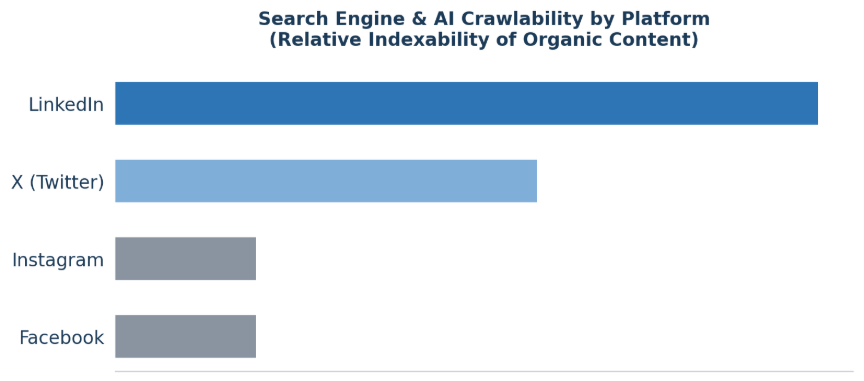
Figure 1: How LinkedIn content feeds into both buyer research and AI entity understanding.
How AI Systems Index and Use LinkedIn Content
AI language models are trained on large bodies of publicly available web content, and LinkedIn’s public content is part of that corpus. This means the descriptions, expertise areas, and positioning language used in LinkedIn company pages, executive summaries, and published articles are part of the data AI systems draw from when building an understanding of a brand.
For live-retrieval AI systems like Perplexity, LinkedIn is actively crawled and can surface directly in AI-generated answers, particularly for queries about specific companies or executives. Google’s AI Overviews similarly pull from indexed LinkedIn content when it is relevant and authoritative.
The practical implication is that what your company page says in its “About” section, what your CEO’s LinkedIn summary describes as their expertise, and what your most recent LinkedIn articles address all contribute to the entity signals AI systems use when deciding how to describe and cite your brand.

The Three LinkedIn SEO Levers for AI Visibility
Not all LinkedIn activity contributes equally to AI visibility. These three levers have the most direct impact.
Lever 1: Entity-Consistent Company Description Your LinkedIn company page “About” section should use the same brand description, category language, and positioning as your website. AI systems that encounter a company page describing a “B2B data analytics company” alongside a website describing an “enterprise data intelligence platform” see inconsistency in the entity record. Align the language precisely.
Lever 2: Topically Relevant Content That Matches Your SEO Clusters LinkedIn content that addresses the same topics as your website’s content clusters reinforces topical authority signals. If your website has a content cluster on ABM strategy, LinkedIn posts from your company page and executives on ABM topics strengthen the topical entity signal that AI systems use to associate your brand with that subject area.
Lever 3: Executive Profile Optimization for Expertise Signals LinkedIn executive profiles are often the most-viewed LinkedIn asset for a company, and they are indexed as author entity records by both search engines and AI systems. An executive profile that clearly lists expertise areas, has a complete work history, links to authored content, and uses professional language consistent with the brand’s positioning contributes meaningfully to the brand’s overall entity authority.

Company Page vs. Personal Profile: What AI Picks Up Differently
| LinkedIn Asset | Primary AI Signal | Optimization Priority |
| Company page | Brand entity description and category association | Consistent “About” section aligned to website positioning |
| Executive personal profile | Author entity credibility and expertise area signals | Complete profile with expertise keywords, published articles |
| Published LinkedIn articles | Topical authority in indexed content | Articles on core topic clusters, properly structured with headings |
| LinkedIn posts | Engagement signals and keyword reinforcement | Consistent topic focus aligned to brand content themes |
| Employee profiles | Organizational credibility and scale signals | Company name consistent, current roles accurate |

A LinkedIn Content Framework for AI Discovery
Publishing consistently on LinkedIn for AI visibility is not the same as publishing for social engagement, though the two goals are compatible. The content framework below balances both.
| Content Type | Frequency | AI Visibility Goal | Engagement Goal |
| Company articles (long-form) | Monthly | Topical authority on core subject clusters | Thought leadership positioning |
| Executive posts (opinion or insight) | Weekly | Author entity expertise signal | Executive visibility and credibility |
| Company page posts (news or content) | 2-3 times per week | Entity freshness signal, brand consistency | Awareness and reach |
| LinkedIn newsletters | Biweekly | Subscriber-based reach with indexed content | Audience building |
THP’s Take: LinkedIn Is a Credibility Signal, Not Just a Channel
THP Studio Perspective
- We frequently find that clients have invested significantly in their website’s SEO while treating LinkedIn as an afterthought managed by a single social media coordinator. The missed opportunity becomes visible the moment you audit what AI systems actually say about the client’s brand: often, the most detailed, indexed, and frequently surfaced descriptions of the company come from LinkedIn, not the website.
- Aligning LinkedIn and website entity signals is one of the fastest paths to improving AI brand representation, and it is work that does not require technical development. It requires a content strategist spending a focused afternoon auditing and rewriting the company page, executive summaries, and article strategy with entity consistency as the explicit goal.
Frequently Asked Questions
Key Takeaways
- LinkedIn is indexed by Google and referenced by AI retrieval systems, making it a meaningful signal layer for brand entity authority and topical credibility.
- Company page descriptions, executive profiles, and published articles all contribute to the entity records AI systems use to describe a brand.
- The three highest-impact LinkedIn levers for AI visibility are: entity-consistent company description, topically relevant content matched to SEO clusters, and executive profile optimization.
- Aligning LinkedIn positioning language with website positioning language is one of the fastest entity consistency fixes available.
- LinkedIn organic content, particularly long-form articles, has direct indexability and AI accessibility that paid LinkedIn content does not.
Work With THP’s Digital & XEO Studio
- THP’s Digital & XEO Studio aligns LinkedIn content strategy with SEO and GEO goals, auditing entity consistency across company pages, executive profiles, and published content, then building the editorial calendar that makes LinkedIn a genuine discovery and credibility asset. If your LinkedIn and website tell different stories about who you are, that is where we start.
Author