
There is a question sitting quietly in most B2B marketing teams right now: when a potential buyer asks ChatGPT to recommend companies in your category, does your name come up? For most brands, the honest answer is: we do not know. Generative engine optimization, or GEO, is the discipline built to fix that. It is the practice of structuring, positioning, and distributing content so that AI systems cite your brand accurately and favorably when generating answers.
GEO is not a rebranding of old SEO tricks with new terminology. It works on different signals, rewards different content behaviors, and requires a different measurement approach than anything most digital marketing teams have used before. That said, the brands that already rank well in traditional SEO are better positioned for GEO than they probably realize. The fundamentals compound. What changes is the direction those fundamentals point.
The timing of this conversation matters too. Right now, GEO is a genuine competitive opportunity because most B2B brands have not yet treated AI citation as a deliberate goal. The window between early mover and mainstream practice tends to be shorter than it looks. Getting into GEO now, while it still represents differentiation, is meaningfully different from arriving after every competitor has a program running.
Quick Takeaway
- Generative engine optimization is the practice of making your content citable, accurate, and authoritative enough for AI systems like ChatGPT and Perplexity to include your brand in their synthesized answers. Early research shows that GEO-optimized content can increase AI citation rates by 40% or more, with the biggest gains coming from content that uses statistics, structured definitions, and clearly attributed expert quotes. The brands that start treating AI citation as a KPI today will have a structural visibility advantage over those that wait until it becomes table stakes.
What Generative Engine Optimization Actually Is
This practice is the set of content and technical practices that improve a brand’s likelihood of being cited inside AI-generated answers. When a user asks ChatGPT “what are the best ABM platforms for mid-market B2B?” the AI draws from a pool of content it has access to, weighted by factors like source authority, content structure, and factual consistency across sources. GEO is the work of making your content highly weighted in that selection process.
It is worth separating GEO from a few adjacent concepts that often get conflated with it. Traditional SEO optimizes for ranking on a results page. Answer Engine Optimization (AEO) focuses on winning featured snippets and position-zero results. GEO specifically targets inclusion in the synthesized responses that large language models generate. All three overlap, but each has distinct mechanics.
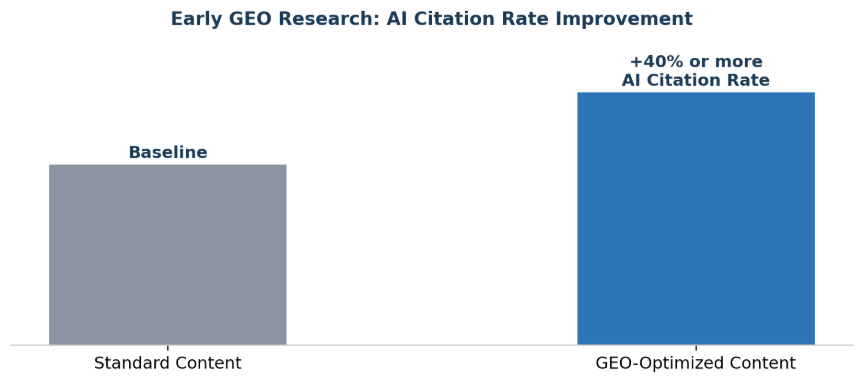
Figure 1: How GEO, SEO, and AEO differ in where they target brand visibility.
Why GEO Is Different From SEO and AEO
The core difference is in how selection works. In traditional search, an algorithm ranks pages by relevance and authority. A buyer then decides which link to click. In a generative engine, the AI decides which sources to synthesize and presents a consolidated answer. The buyer may never see the sources at all, or may see them listed with low visibility at the bottom of a response.
This changes what matters. A page that ranks fifth on a search results page still gets seen by users who scroll down. A source that is not cited in an AI-generated answer gets no representation in that interaction at all. The binary nature of AI citation, either you are in the answer or you are not, is why GEO deserves its own strategic treatment rather than being folded into an existing SEO program.
The other key difference is the weighting of freshness and factual accuracy. Traditional search engines have always rewarded fresh content, but an AI system synthesizing an answer penalizes factual inconsistency much more directly. If your brand is described one way on your website, a different way in a press release, and another way in a third-party article, the AI may simply avoid citing you because the inconsistency creates uncertainty about which description is accurate.
How AI Engines Decide Which Sources to Cite
AI systems like ChatGPT and Perplexity use a combination of training data and live retrieval to generate answers. Understanding which of those mechanisms is at play for a given query matters for how you prioritize GEO effort.
For queries where live retrieval is active (especially in Perplexity and ChatGPT with browsing enabled), the system is pulling from pages it can currently access and index. In that mode, content that answers the query directly, is well-structured, comes from an authoritative domain, and is corroborated by other sources gets prioritized.
For queries that rely on training data, the brand’s broader footprint matters more: third-party publications, analyst mentions, Wikipedia presence, and the volume of consistent, accurate information about the brand across the open web.
Most B2B marketing teams need to optimize for both mechanisms simultaneously, since you rarely know which one is driving a given query result.
A Generative Engine Optimization Framework: Five Factors
There is no single GEO lever that works in isolation. These five factors, applied together, produce the most consistent improvement in AI citation rates.
| GEO Factor | What It Means | How to Apply It |
| Answer clarity | Your content directly answers the question a buyer would ask | Lead with a concise, direct answer before expanding into detail |
| Entity consistency | Your brand is described the same way across every source | Audit and align your brand description across all web properties |
| Source authority | Third-party credible sources mention your brand accurately | Actively pursue coverage in industry publications and analyst reports |
| Topical depth | You cover a subject comprehensively, not just superficially | Build content clusters, not isolated posts, on your core topics |
| Data attribution | Your content includes verifiable statistics and named sources | Cite specific studies and reports with links, not vague “research shows” claims |
Common Content Mistakes That Get You Ignored by AI
Most brands are unintentionally making themselves harder to cite. These are the patterns we see most often when auditing content for GEO performance:
- Writing content that circles a topic without ever directly answering the buyer’s specific question, which forces the AI to look elsewhere for a cleaner answer
- Using brand names inconsistently (abbreviations, old names, informal references) across different pages, which creates entity confusion for AI systems
- Publishing content without named authors or clear attributions, which weakens the E-E-A-T signals that correlate with AI citation selection
- Relying entirely on first-party content when AI systems weigh third-party corroboration heavily
- Ignoring schema markup, particularly FAQPage and Article schema, which structures content in a format AI systems can parse and extract cleanly
THP’s Take: Citations Are the New Conversions
THP Studio Perspective
- We have started asking clients a question that would not have made sense two years ago: When a buyer asks an AI tool about your category, what does the AI say about your brand? We often see competitor names mentioned, along with conspicuous silence where the client’s brand should be. For most, the answer involves some combination of inaccurate information, competitor mentions, or a visibility gap. That gap is where GEO work comes in.
- The practical starting point is not a full content overhaul. It is an audit of what AI systems are currently saying about your brand, followed by targeted fixes to the two or three most common errors or omissions. From there, it is about building the content depth and third-party presence that earns consistent citation over time. Quick fixes are possible. Durable GEO performance is a program, not a project.
Frequently Asked Questions
Key Takeaways
- GEO targets citation in AI-generated answers, a distinct goal from ranking in traditional search.
- AI citation selection rewards direct answers, entity consistency, third-party corroboration, topical depth, and attributed data.
- Most brands have unintentional GEO blind spots: entity inconsistency, thin content, missing schema, and over-reliance on owned channels.
- Start with an audit of what AI tools currently say about your brand before rebuilding content strategy.
- GEO is a sustained program, not a one-time fix. Early movers have a meaningful window of competitive advantage right now.
Work With THP’s Digital & XEO Studio
- THP’s Digital & XEO Studio runs GEO audits and builds the content programs behind consistent AI citation: from entity cleanup and content restructuring to the third-party presence that earns your brand a place in the answers your buyers are already reading. If you do not know what AI is saying about you today, that audit is where we start.
Author