
B2B marketers spent years assuming short-form video belonged to consumer brands and that enterprise buyers preferred long, detailed content to match a complex buying process. That assumption has not held up. Short-form video marketing, generally 30 seconds to two minutes in length, vertical, and designed for mobile viewing, is now one of the best-performing video formats across nearly every channel B2B brands use, including platforms built for professional audiences.
The data behind this trend is clear enough to guide strategy. Marketers consistently report that videos in the 30-second to two-minute range perform best, and most viewers say they prefer short videos over text or long-form content when learning about a product. For B2B teams accustomed to relying on gated webinars and lengthy assets, this represents a meaningful change in how buyers prefer to consume information.
It is important to be precise about what is actually changing. Long-form content such as webinars, whitepapers, and product documentation still plays an important role later in the buying journey. What has changed is the entry point. The first interaction a buyer has with a brand is increasingly through short-form content, and a company’s short-form video presence now performs much of the awareness and first-impression work that once belonged primarily to the homepage.
Quick Takeaway
The 90-second rule reflects where B2B video performance data has landed, videos in the 30-second to two-minute range consistently outperform longer formats, with 71% of marketers rating that window as their best-performing length. The format works because it matches how buyers actually consume content between meetings, not because attention spans have collapsed. Teams that build short-form as a repeatable series, rather than one-off clips, see the format compound over time.
What the 90-Second Rule Actually Means
The 90-second rule isn’t a hard cutoff. It’s a useful midpoint inside the broader 30-second to two-minute range that performance data consistently favors for short-form video marketing. Below 30 seconds, there’s rarely enough time to make a complete point. Above 2 minutes, completion rates start dropping quickly on channels where short-form lives, like LinkedIn feeds and YouTube Shorts. Ninety seconds sits comfortably in the middle: long enough to show a real product moment or make a real argument, short enough that almost no one drops off before the payoff.
Treat the number as a planning guideline rather than a strict rule to follow for every single video. Some formats genuinely need 45 seconds; others earn a full two minutes because the content is unusually compelling. The discipline worth keeping is checking every script against the question of whether it could say the same thing in less time.
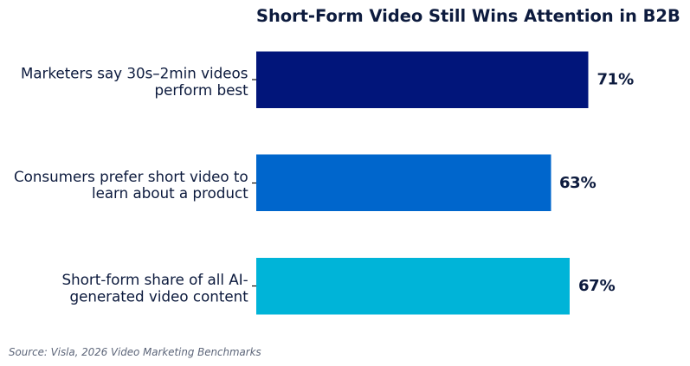
Figure 1: Why short-form video is winning attention, even in B2B.
Why Short-Form Video Is Winning Even in Enterprise B2B
The behavioral logic is straightforward once you account for how buyers actually spend their day. Enterprise buyers snack on content between meetings, during a commute, or while scanning a feed before a call starts, not in a dedicated 20-minute block set aside for vendor research. Short-form video fits that reality a gated webinar does not.
There’s also a shift in credibility beneath the format preference. Buyers increasingly treat a tight, well-produced 90-second explainer as a sign that a company respects their time, while a long, unfocused video can read as a sign that the company doesn’t know what its own core message actually is.
This preference shows up across platforms, not just one. Short-form makes up the majority of AI-generated video content now produced, and vertical formats have overtaken horizontal ones in overall volume. This pattern started on consumer social media and has since spread to the channels B2B buyers use for professional research, including LinkedIn and YouTube Shorts.
The Anatomy of a Short-Form Video That Performs
The videos that consistently perform well share a structure, regardless of topic. They open with a hook in the first two to three seconds, a problem statement, a surprising number, or a visual pattern interrupt, because that window decides whether a viewer keeps watching at all. They make exactly one point, resisting the urge to cram in three product features when one clear idea would land harder. And they end with a specific next step, not a vague “learn more.”
Teams that track performance closely watch retention by the second, not just overall view count, because the data usually reveals exactly where a video lost viewers, often the moment a logo, intro animation, or scene-setting sentence delayed the actual hook by even a few extra seconds.
A Format Framework for Common B2B Use Cases
Different short-form formats solve different problems. The table below maps the formats we use most often for B2B clients to the job each one does best
| Format | Length | Best Use Case |
| Problem/fix | 30–45 seconds | Naming a specific pain point and the one fix for it |
| Mini demo | 45–90 seconds | Showing the product in motion, not describing it |
| Myth vs. reality | 30 seconds | Correcting a common misconception fast |
| Before/after | 15–45 seconds | Visual proof of a result, with minimal narration |
Mistakes That Sink Otherwise Good Short-Form Video
Most underperforming short-form video isn’t badly made. It’s structured for the wrong context. Watch for these patterns:
Many of these mistakes carry over directly from long-form production habits, where there was more room for a slow build. Short-form has almost none of that margin, which means every production decision needs to be re-evaluated against a much tighter window for holding attention.
- Front-loading a logo and brand intro instead of the hook, burning the first three critical seconds
- Trying to cover an entire product in one clip instead of one clear idea per video
- Shooting horizontal video for a feed built for vertical viewing, forcing awkward cropping
- Ending on a generic call to action instead of a specific, low-friction next step
- Publishing one-off clips instead of a recognizable series, so nothing compounds into a format viewers come to expect
THP’s Take: Treat Short-Form as a Series, Not a Post
THP Studio Perspective
The biggest performance gap we see between clients isn’t production quality. It’s whether short-form video is planned as a repeatable series with a consistent format, or produced as scattered, one-off posts whenever someone remembers to film something. A series builds audience recognition over time the same way a podcast or newsletter does. A one-off post, however well made, has to win attention from a cold start every single time.
We’d encourage any team starting out to commit to a named series format before worrying about production polish. A consistent, recognizable format published reliably will outperform a single beautifully produced video with no follow-up, almost every time.
Frequently Asked Questions
Key Takeaways
- Short-form video in the 30-second to two-minute range now consistently outperforms longer formats, even with B2B audiences.
- 71% of marketers rate that window as their best-performing video length, and most consumers say they prefer short video when learning about a product.
- High-performing short-form video opens with a hook in the first few seconds and covers exactly one idea.
- Match the format to the job: problem/fix, mini demo, myth vs reality, and before/after each solve a different communication need.
- Treat short-form as a recurring series rather than one-off posts. Consistency compounds audience recognition over time.
Work With THP’s Video Production & Motion Graphics Studio
THP’s Video Production & Motion Graphics Studio builds short-form video series engineered around the 90-second rule, scripted, shot, and edited as a repeatable format rather than a one-off clip. If your B2B video content still defaults to long-form, this is where we’d start the conversation.
Author