Of everything HubSpot AEO reports, citation analysis is the part that changes what you do on Monday. The visibility score tells you where you stand. Citation analysis tells you what the answers are made of, which is the only information in the product that converts directly into a plan.
It is also the report most likely to deliver an unwelcome message: in many B2B categories, the sources answer engines rely on are ones you do not own and cannot publish your way into. This article covers how HubSpot tracks citations, what the reports mean, how to find gaps, and what to do about them. For the tool overall, see our guide to HubSpot AEO.
Quick Takeaway
- Citation analysis usually reveals that most of your category’s answers are built from third-party sources. That makes AEO a digital PR and community problem at least as much as a content problem, which is uncomfortable but useful to know early.
What HubSpot Counts as a Citation
In HubSpot AEO, a citation is recorded when an answer engine includes or references a link to a webpage, or a domain name embedded in its answer.
HubSpot’s documentation adds a clarification that prevents a common misreading: citations are separate from brand mentions, and a source can be cited without mentioning your brand name.
That produces four combinations, and they need different responses. A page of yours cited in an answer that recommends a competitor is a different problem from not appearing at all. We cover that distinction in HubSpot AI visibility.
How HubSpot Sorts Citations
Every citation carries two labels, which is what makes the report usable as a content plan.
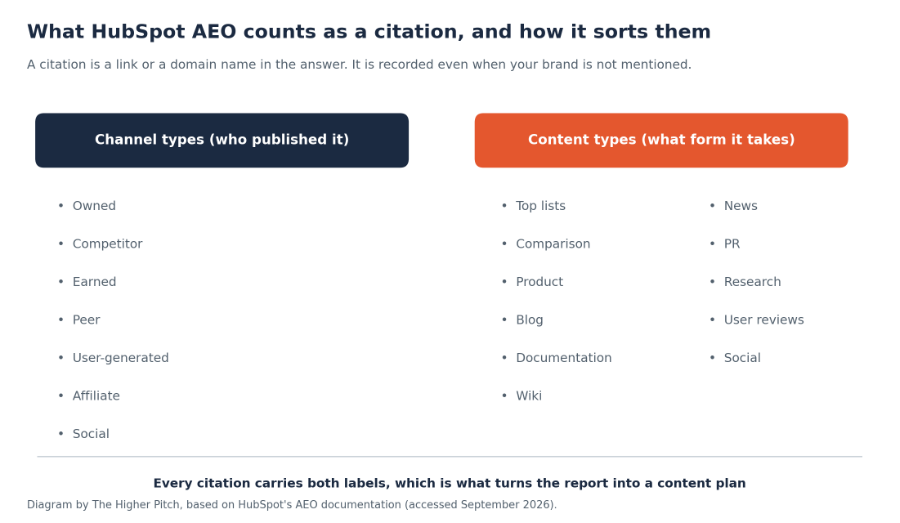
Figure 1: Channel and content types. Diagram based on HubSpot’s documentation.
Channel types describe who published the source: owned domains, competitor sites, earned media, peer companies, user-generated content, affiliate sites and social platforms.
Content types describe what form it takes: top lists and listicles, comparison articles, product pages, blogs and news articles, documentation and technical docs, wiki-style information pages, research and reports, user reviews and social content.
Read them together. “We are absent from comparison articles on earned media” is a brief. “Our visibility is low” is not.
The Citation Reports and What Each Is For
| Report | What it shows | The decision it informs |
| Owned domain citation rate vs competitors | How often engines cite your site versus competitor domains | Whether your own content is pulling its weight |
| Citations with brand mention rate vs competitors | How often your brand is referenced in citations, wherever the content originates | Whether third parties carry your brand |
| Citations by content type | Which formats engines reference for your prompts | What to create next |
| Citations by channel | What types of site engines reference | Whether the work is publishing or outreach |
| Top domains | The websites most commonly referenced | Your outreach target list |
| Top owned citations | Your pages engines reference most | What to protect and extend |
| Top citations overall | The third-party sources most influencing how you are described | Where PR effort should go |
Table 1: HubSpot’s citation reports, as described in its documentation.
Two of these deserve highlighting. Citations by channel is the report that tells you whether your AEO programme is a content project or a PR project. Top citations overall is, in most B2B categories, a short list of sources that shape how your category is described to every buyer using these tools.
HubSpot notes that citations with brand mention rate includes third-party sources such as reviews, news articles and industry publications, and that even when engines do not cite your website directly, they may still reference your brand through external sources.
Owned Versus Third-Party Citations
HubSpot frames the owned citation rate plainly: a higher share of owned citations means answer engines rely more on content you control when generating responses, which gives you more influence over how your brand is represented.
That is true, and worth balancing against two realities:
- You cannot manufacture a high owned share. If your category’s answers are built from review platforms and industry publications, publishing more of your own content will not change the mix much.
- Third-party citations carry more weight with buyers. A recommendation sourced from a review site reads differently from one sourced from a vendor’s own page.
The useful target is not maximizing owned citations. It is being present and accurately described across the sources that already dominate your category.
| Citation pattern | What it tells you | Where to act |
| High owned, low third-party | You are talking to yourself | Digital PR, reviews, community |
| Low owned, high third-party | Others define you | Make your own pages citable, keep facts consistent |
| Low both | You are absent from the conversation | Start with the top domains list |
| High both | Healthy position | Protect it, and watch competitor trends |
Table 2: Reading the owned versus third-party mix.
Analyzing Competitor Citation Sources
The same reports work competitively. Comparing your citation profile with competitors usually surfaces one of three patterns:
- A source they appear in and you do not. The most directly actionable finding in the whole product.
- A content type they produce and you do not. If comparison articles or listicles dominate citations and you publish neither, that is the gap.
- A channel concentration difference. A competitor strong in user-generated content has community presence you may have no plan for.
The competitive reading is covered more fully in competitor analysis.
Finding Citation Gaps
A structured pass, in order:
- Start at citations by channel. What proportion of the answers in your category are built from sources you own?
- Then citations by content type. Which formats do engines prefer for your prompts, and which do you not produce?
- Then top citations overall. Which specific third-party sources appear repeatedly?
- Then per prompt. Open individual prompts, where HubSpot provides citations by channel, top citations overall, citations by content type and owned domain citation rate versus competitors for that question alone.
- Then top owned citations. Which of your pages are already being used, and can they be extended?
The output should be a list of named sources and named formats, not an adjective about your visibility.
Building Content That Is Easier to Cite
Grounded in what the reports usually show and in Google’s guidance, which states there are no additional requirements for AI features beyond foundational SEO best practices:
- Produce the formats that get cited. If comparisons and listicles dominate your category’s citations and you publish neither, that gap is the plan.
- Answer first. Lead with a direct answer, then support it. Extractable answers are the unit these systems work with.
- Make claims traceable. Cite primary sources. Content that cites tends to be easier to cite.
- Be explicit about who you are. A page that explains a problem without naming your product can feed an answer that recommends someone else.
- Keep facts consistent everywhere, including third-party profiles, since inconsistency weakens what a model can state confidently.
- Cover subtopics properly. Google notes AI features may use a query fan-out technique, issuing multiple related searches across subtopics.
Our pieces on generative engine optimization and entity SEO cover the technical side.
The Part Most Teams Underestimate: Earning Third-Party Citations
If citations by channel shows earned, peer and user-generated sources dominating, your AEO work is mostly outside your CMS. That means:
| Source type | What earning presence looks like | Who owns it |
| Earned media | Industry publications, analyst coverage, contributed articles | PR and comms |
| User reviews | Presence and recency on review platforms buyers use | Customer marketing |
| User-generated | Genuine participation in communities such as Reddit | Someone credible, not a brand account |
| Peer companies | Partnerships, integrations, joint content | Partnerships |
| Social | LinkedIn, YouTube and similar, where citations show them being used | Content and executives |
Table 3: Where third-party citations come from and who should own each.
HubSpot’s Insights tab groups social channel reports by platform, including LinkedIn, Reddit and YouTube, which is a useful prompt for deciding who owns what. Our pieces on LinkedIn SEO and executive visibility cover the people-led side of this.
Community participation deserves one caution. Communities react badly to brands that arrive because a dashboard told them to. If Reddit or a specialist forum shows up in your citations, the answer is genuine participation by someone with standing, not a posting campaign.
Measuring Citation Growth Over Time
Track four things rather than one:
- Owned domain citation rate versus competitors, as a trend rather than a level.
- Citations with brand mention rate, which captures third-party references even when your site is not cited.
- Count of distinct domains citing you, since concentration in one source is fragile.
- Presence in the specific top sources you targeted, which is the clearest proof that outreach worked.
Set the window in months. HubSpot notes that answer engine responses change over time and that improvements may not appear immediately, so impact should be reviewed across multiple analysis cycles. Record what you published or placed and when, or you will not be able to attribute anything.
THP Studio Perspective
- The message we would prepare a leadership team for before they open this report is that most of the work it points to is not marketing content. In the B2B categories we work in, answer engines lean heavily on review platforms, industry publications and community threads, and a brand absent from those cannot publish its way in. That makes citation analysis a strong argument for digital PR budget and a weak argument for more blog posts, which is the opposite of what most teams expect when they buy an AI visibility tool.
Frequently Asked Questions
Key Takeaways
- Use citation analysis as the action layer of AEO; it is the only report that converts directly into a plan.
- Read channel and content type together, since one tells you who publishes and the other what to produce.
- Expect third-party sources to dominate in most B2B categories, which makes this a PR and community brief as much as a content one.
- Check for pages of yours cited in answers that recommend someone else, and make your own position explicit there.
- Track distinct citing domains and presence in named target sources, not just an aggregate citation rate.
Work With THP’s PR & Media Profiling Studio
- THP’s PR & Media Profiling Studio works on digital PR, media profiling and thought leadership, which is where most citation gaps actually get closed. If your citation data points at industry publications and communities you have no presence in, that is the work.
Author