A visibility score is a seductive number. It is a single percentage, it goes up and down, and it fits neatly on a slide. It is also the AEO metric most likely to be misread, because almost nobody reporting it can explain what it is a percentage of.
This article covers what HubSpot’s AI visibility measure is actually built from, how to read it across engines and over time, how to find the gaps behind a mediocre score, and what genuinely moves it. For the tool overall, see our guide to HubSpot AEO.
Quick Takeaway
- Your visibility score is a function of the prompts you chose. It is not a market position, it is not comparable with anyone else’s number, and a single figure covering all four buyer journey phases will hide the only gap that costs you deals.
What AI Visibility Means in HubSpot
In HubSpot AEO, brand visibility is how often your brand is mentioned among the prompts you track, across ChatGPT, Gemini and Perplexity.
HubSpot’s knowledge base adds that it also shows how answer engines interpret your brand based on public information on the web, and states that brand visibility is analyzed on three things:
- Prompt coverage: the percentage of prompts where your brand appears at least once.
- Frequency across answer engines: whether your brand shows up consistently across different engines.
- Relative competitor presence: how often competitors appear in the same prompt results.
That third component is worth pausing on. Your visibility reading is not purely about you; it is influenced by how crowded the answers are. A category where models name eight vendors behaves differently from one where they name two.
How to Read the Score Without Misleading Anyone
HubSpot states plainly that a lower score may indicate one of three different problems: your brand appears in fewer prompts, appears inconsistently across answer engines, or is mentioned less often than competitors. Those need different responses.
| What the score reflects | The underlying problem | Where to look next |
| Low prompt coverage | You are absent from whole topics | Prompt-level view, by buyer journey phase |
| Inconsistent across engines | One engine draws on sources you are missing from | Filter by engine, then check citations |
| Mentioned less than competitors | You are present but not prominent | Competitor landscape and share of voice |
Table 1: Three different problems behind one number.
Three cautions to set before the first report:
- The score depends on your prompt set. Change the prompts and the number changes, with no change in the market. This makes cross-company benchmarking meaningless.
- Daily movement is noise. HubSpot states responses change over time and advises reviewing performance across multiple days or weeks before evaluating trends.
- Coverage is three engines. ChatGPT, Gemini and Perplexity. It is not a measure of visibility everywhere buyers might ask.
Read Visibility by Buyer Journey Phase, Not in Aggregate
This is the single most useful thing to do with the data, and it is easy to miss.
HubSpot assigns every prompt one of four buyer journey phases and notes that in Awareness prompts, which are broad, unbranded and problem-based, brand mentions are typically lower. Consideration prompts are unbranded queries comparing solutions. Evaluation prompts are branded comparisons naming your company or competitors. Decision prompts are high-intent queries about whether a specific product meets defined needs.
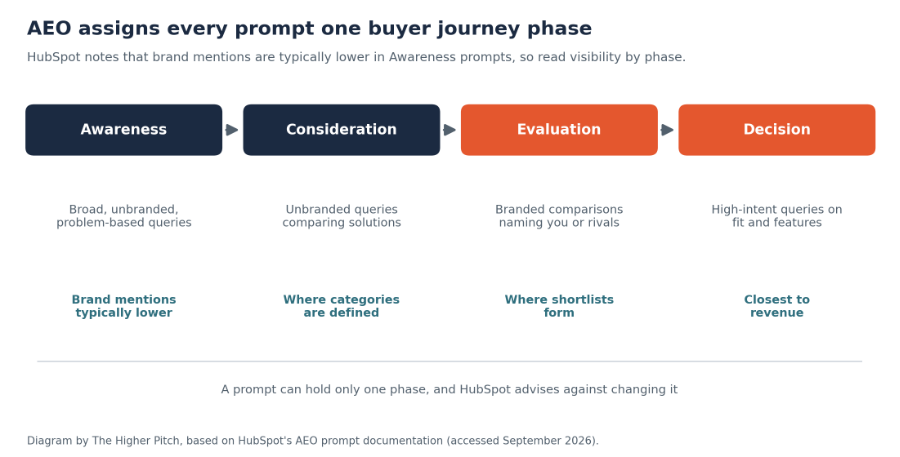
Figure 1: The four phases. Diagram based on HubSpot’s documentation.
A blended score mixes phases where low mentions are expected with phases where absence is commercially serious. Splitting it produces a much more useful conversation: strong Awareness visibility with weak Evaluation visibility means models discuss your topic without naming you when a buyer is choosing, which is the most expensive pattern there is. HubSpot notes that a prompt can hold only one phase and advises against changing it.
Tracking Across ChatGPT, Gemini and Perplexity
HubSpot states that each answer engine may generate different responses, cite different sources, or return different levels of detail for the same prompt, and provides filters to compare by engine.
Differences between engines are information, not error. A consistent gap on one engine usually points at a source problem: that engine draws more heavily on retrieval from sources where you are absent, or on training data where your brand is thinly represented.
Practical routine: filter to each engine, read the actual responses for your most commercially important prompts, and note which competitors and which sources appear. That takes fifteen minutes and tells you more than a month of watching the headline number.
Brand Mentions Are Not the Same as Citations
This distinction confuses most teams, and HubSpot is explicit about it: citations are separate from brand mentions, and a source can be cited without mentioning your brand name.
| Situation | What it means | What to do |
| Mentioned, your site cited | The answer draws on your content and names you | Protect and extend that content |
| Mentioned, your site not cited | Third parties are carrying your brand | Strengthen those relationships; find why your pages are not used |
| Not mentioned, your site cited | Your content informs the answer without earning credit | Make your brand and position explicit within the content |
| Not mentioned, not cited | You are absent from the conversation | Start with citation analysis to see what is being used instead |
Table 2: Four combinations of mention and citation.
The third row surprises people. It is common for a well-written explainer to inform an answer that then recommends someone else. Citation analysis is where you diagnose this.
Sentiment: How AI Describes You, Not Just Whether It Does
HubSpot’s sentiment analysis tab reports a sentiment score, described as how positively or negatively your brand is described in answer engine responses, along with sentiment over time.
Two ways to use it:
- Investigate at prompt level, not in aggregate. A single prompt producing consistently negative descriptions is a specific problem with a specific source behind it, usually findable in citations.
- Watch it after changes. A reputational issue reaching a widely cited source will show here before it shows anywhere else.
Tracking Visibility Over Time
The brand visibility over time report shows how your score changes. Three rules for reading it:
- Set the window in weeks. Anything shorter reflects model variance more than your marketing.
- Annotate your changes. Keep a dated record of publications, campaigns and PR placements, since HubSpot notes improvements may not appear immediately and should be assessed across multiple analysis cycles.
- Watch for setup-driven steps. If you add competitors or change prompts, the line moves for reasons unrelated to performance. HubSpot notes that competitor changes affect only future data runs and advises adjusting your date filter accordingly.
Finding the Gaps Behind the Score
A structured way to turn a number into a list of actions:
- Split by phase. Which phase is weakest relative to the others?
- Split by engine. Is the weakness general or specific to one engine?
- Drill to prompts. Which individual prompts return no mention? HubSpot’s prompt view shows total prompts, average visibility, total responses and total citations, and lets you open any prompt to read the exact response.
- Check who is named instead. The competitor visibility and prompt visibility rate versus competitors reports show who owns the conversation you are missing.
- Check what is cited. Citations by channel and by content type tell you what kind of source the answer is built from.
That sequence converts “our score is 34%” into “we are absent from six Evaluation prompts where two competitors are named, and the answers are built mostly from listicles and user reviews we do not appear in”. The second version is a plan.
What Actually Improves an AI Visibility Score
Grouped by how quickly they tend to move, and honest about what is not in your control:
| Lever | What it involves | Realistic pace |
| Fix technical and content gaps | Crawlability, clear answers, structured information, consistent entity data | Fastest, and worth doing regardless |
| Create missing content formats | The content types citations show being used: comparisons, listicles, documentation | Moderate |
| Update existing pages | Make your position and product explicit where content is already cited | Moderate |
| Earn third-party presence | Reviews, industry publications, community discussion | Slow, and the most durable |
| Consistency of brand facts | The same description of what you do everywhere | Slow, and often overlooked |
Table 3: Levers on AI visibility, and how fast they move.
Two limits to state honestly. First, no one can guarantee inclusion in an AI answer; model updates and retrieval behaviour change without notice. Second, in most B2B categories the majority of cited sources are ones you do not own, which means a meaningful share of this work is PR and community rather than publishing. Our pieces on generative engine optimization and entity SEO cover the technique, and share of AI voice as a marketing KPI covers framing it for leadership.
Reporting Visibility Upward Without Overclaiming
| Leader | What to show | What to avoid |
| CEO | Visibility in Evaluation and Decision prompts, with competitor context | A single blended percentage |
| CMO | Trend by phase and engine, plus what changed and when | Reacting to weekly movement |
| Sales leader | The actual answers for comparison prompts | Aggregate scores with no examples |
| CFO | Cost of the programme against a defined outcome | Implying the score is revenue |
Table 4: The internal buying-committee lens on visibility reporting.
THP Studio Perspective
- If we could remove one number from AEO reporting it would be the blended visibility score: the one most likely to reach a board and least likely to mean anything. It moves when models update, when you edit your prompt set and when a competitor runs a campaign, and it is a percentage of a list you chose yourself. The version worth reporting is narrower: on the ten questions a buyer asks when choosing a vendor, here is how often we are named, and who is named instead.
Frequently Asked Questions
Key Takeaways
- Treat the visibility score as a function of your prompt set, never as a market position or a cross-company benchmark.
- Split visibility by buyer journey phase, since low Awareness mentions are expected while Evaluation absence costs deals.
- Read engine-level differences as evidence about sources rather than as measurement error.
- Separate mentions from citations, because content that informs an answer without earning a mention is a distinct, fixable problem.
- Report on named comparison prompts with examples, not a blended percentage that hides the one gap that matters.
Work With THP’s Digital & XEO Studio
THP’s Digital & XEO Studio works across SEO, AEO, GEO and AI search visibility for B2B brands. If your visibility score is being reported but nobody can say what to do about it, translating it into a content and outreach plan is usually the missing step.