Vendor frameworks usually arrive with more branding than substance. The reasonable first question about HubSpot’s Loop Marketing is whether it describes a real change in how marketing works, or repackages what teams were already doing with new stage names attached to product launches.
The honest answer is: some of both. The diagnosis behind it is sound and well evidenced. Parts of the framework are genuinely new. Other parts are inbound marketing with AI tooling on top, which HubSpot itself more or less says. This guide sets out what Loop Marketing actually is, where the framework earns its claims, where a B2B marketing leader should be sceptical, and how to run it without buying every product in the announcement.
Quick Takeaway
- Loop Marketing is a four-stage operating rhythm (Express, Tailor, Amplify, Evolve) built on three foundations: a customer guide, a style guide and a clean data layer. The foundations are where most implementations succeed or fail, and none of them is a product you can buy.
Loop Marketing Is HubSpot’s Four-Stage Framework for Running Marketing in the AI Era
Loop Marketing is HubSpot’s four-stage framework (Express, Tailor, Amplify, Evolve) in which marketing runs as a continuous cycle rather than a linear campaign, combining human creativity with AI execution, and where each cycle’s learning feeds the next.
HubSpot introduced the Loop on 3 September 2025 at its INBOUND conference. On its Loop Marketing playbook page, the company describes it as a four-stage approach combining AI efficiency, human authenticity and taste, and says the Loop applies to any objective, from building awareness to increasing email open rates to launching a product.
Two clarifications before going further. First, Loop Marketing is a framework, not a product: you cannot buy it, though HubSpot maps specific tools to each stage. Second, HubSpot is explicit that it does not replace inbound marketing. On the same page, the company says the core components of inbound are still essential but no longer enough, and that Loop Marketing builds on the inbound foundation.
The Diagnosis Behind the Loop Is Better Evidenced Than the Framework Itself
HubSpot’s argument for a new framework rests on the decline of search clicks and the scattering of buyer attention. Kipp Bodnar, HubSpot’s CMO, is quoted in the announcement saying that the old funnel assumed customers would come to you, and that when a majority of searches never leave Google and AI answers questions before prospects click, that playbook is broken.
The data holds up, and has moved further since the launch. HubSpot’s announcement cites 60% of Google searches ending without a click, attributed to SparkToro’s 2024 zero-click study, which actually reported 58.5% in the US and 59.7% in the EU. SparkToro’s 2026 study, using a Similarweb clickstream panel for January to April 2026, found that 68.01% of US Google searches ended without a click.
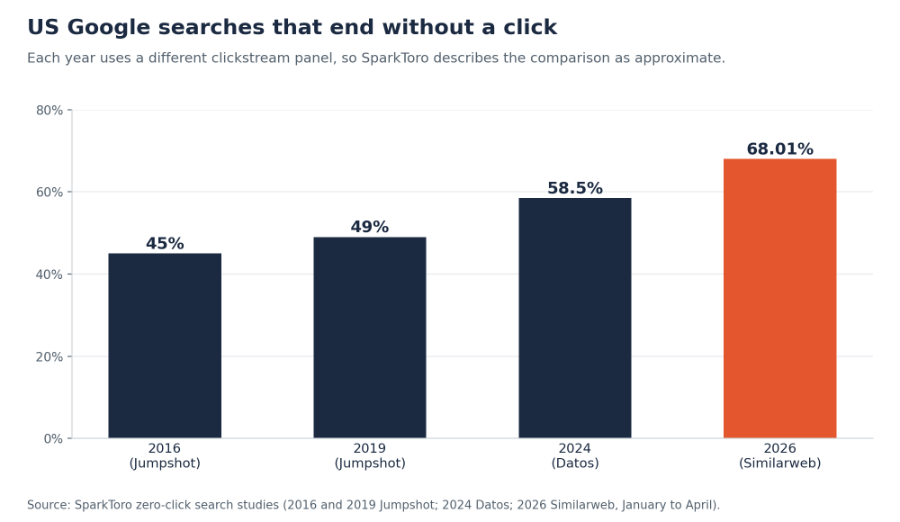
Figure 2: Source: SparkToro zero-click search studies. Rand Fishkin notes the cross-year comparison is approximate, because the 2016 and 2019 figures come from the Jumpshot panel, 2024 from Datos and 2026 from Similarweb.
The caveat matters and is Fishkin’s own: these are different panels, different users and different devices. The trend is clear even so, and it is the strongest part of the case for changing how marketing is organized. We have written about what this means for B2B teams in zero-click search and why B2B website traffic is dropping.
How Loop Marketing Works: Three Foundations, Then Repeating Cycles
HubSpot’s playbook page sets out three foundations to have in place before running a first loop:
- A customer guide: target company characteristics, buyer personas, buying committee profiles, and the pain points and goals that drive decisions.
- A style guide: brand voice, identity and point of view, including mission, values, messaging pillars and positioning.
- A data layer: clean CRM data and connected data sources, so AI has the context to sound like you rather than like everyone else.
Only then do you run loops, each aimed at one objective.
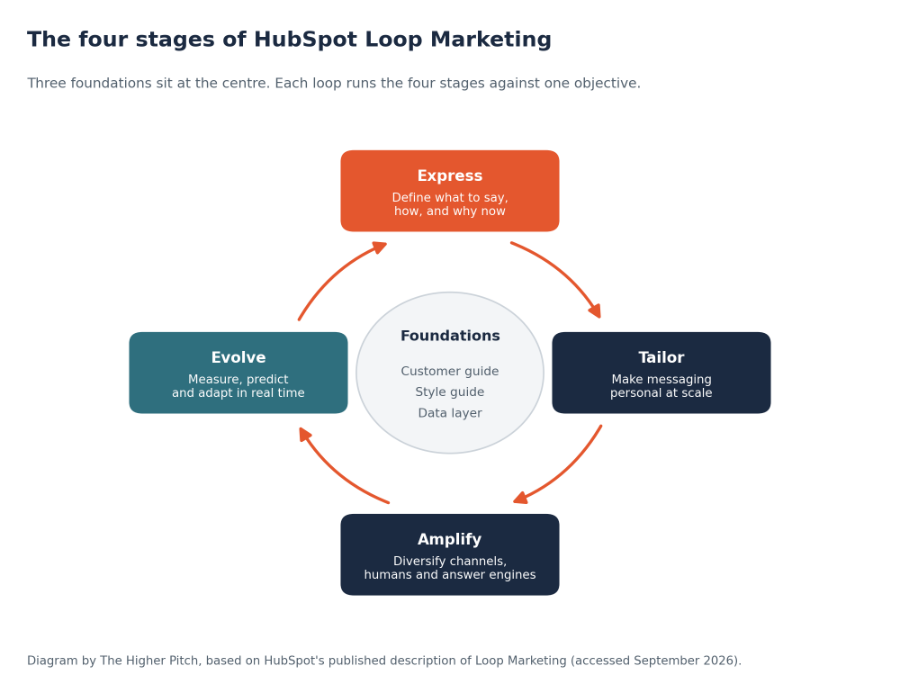
Figure 1: The four stages and the three foundations. Diagram based on HubSpot’s published description.
Notice what the foundations have in common: none of them is a feature. A customer guide is research, a style guide is positioning work, and a clean data layer is CRM discipline. That is worth saying plainly, because the framework is easy to read as a product roadmap when the hard part is the preparation. If your positioning is generic or your CRM data is unreliable, the Loop will run and produce generic, badly targeted output faster than before.
Express: Decide What You Stand For Before AI Writes Anything
HubSpot describes Express as defining your taste, tone and point of view before bringing in AI, and says brand identity and deep customer understanding are what separate great content from generic content. Its playbook frames the stage as generating a campaign story, creating the core asset the campaign drives traffic to, and planning how the story appears across formats and channels.
The strategic point underneath is the one to take seriously. When every competitor uses similar models trained on similar material, the differentiator is the input: what you believe, who you serve and what you will not say. This is the same argument we make in why most B2B brands sound interchangeable, and it applies with more force once AI is generating the volume.
Tools HubSpot maps to this stage include Brand Identity (beta), Breeze Assistant and Marketing Studio (beta). The full stage-by-stage detail is in the Loop Marketing framework explained.
Tailor: Personal Rather Than Personalized, Which Depends on Your Data
HubSpot’s description of Tailor is unusually specific about the standard: experiences that feel more “how did they know?” and less “Dear {First Name}”, built from unified data including CRM records, call transcripts and website behaviour.
That is a fair description of the goal and a good indication of the prerequisite. Personalization at this level is a data problem before it is an AI problem. If contacts are duplicated, sources are overwritten and lifecycle stages are inconsistent, AI-driven segmentation will be confidently wrong at scale. Before investing here, work through the signs your CRM data is holding back growth.
HubSpot maps AI-Powered Segmentation (beta), Personalization (beta) and AI-Powered Email (beta) to this stage.
Amplify: Be Discoverable Where Buyers Actually Are, Including Answer Engines
Amplify is the stage where the framework’s diagnosis turns into instructions. HubSpot’s description is that customers are asking ChatGPT, watching YouTube, trusting creators, skimming G2 and Reddit, and turning to communities, so the work is to be discoverable across channels and recommended by the voices buyers trust.
Two practical pieces sit inside this. The first is repurposing: remixing one asset into the formats each channel expects. The second is answer engine optimization, which HubSpot now sells as a product. HubSpot AEO is currently in beta at $50 a month, tracking brand visibility, prompts, citations and competitor share of voice across ChatGPT, Gemini and Perplexity, according to its product page.
Our AEO guide for Loop Marketing covers this stage in depth, and our existing pieces on generative engine optimization, entity SEO and share of AI voice cover the underlying mechanics.
Evolve: Shorten the Distance Between Learning and Acting
HubSpot describes Evolve as a live feedback loop: predicting which campaigns are likely to convert before publishing, monitoring performance as it happens, running rapid experiments, and applying each learning to creative, targeting and spend.
The genuine shift here is cadence rather than capability. Most B2B teams could already run experiments; what they could not do was act on results inside a week. The claim that AI makes changes possible in days rather than quarters is plausible for content and targeting adjustments, and much less plausible for anything requiring approvals, legal review or a media commitment. Plan for both speeds.
Loop Marketing Against the Funnel and Against Inbound
| Dimension | Traditional campaign funnel | Loop Marketing |
| Shape | Linear, awareness to purchase | Cyclical, each cycle informing the next |
| Unit of work | The campaign | The loop, aimed at one objective |
| Personalization | Segments defined in advance | Continuous, driven by unified data |
| Channels | Owned channels plus paid | Diversified, including answer engines |
| Optimization | After the campaign ends | During, with rapid experiments |
| Team model | Humans execute | Humans and AI working together |
Table 1: Loop Marketing compared with the campaign funnel. The full comparison is in Loop Marketing vs the marketing funnel.
On inbound, HubSpot’s position is that Loop Marketing extends rather than replaces it. The announcement says the Loop remains true to the principles that made inbound work (educating customers, creating value, building relationships) adapted to a world where buyers are everywhere except your website. That is a reasonable framing, and it also means a team with good inbound practice is not starting from zero.
Smart CRM and HubSpot’s AI Layer: Check the Names Before You Plan
This is where published articles about Loop Marketing go out of date fastest. HubSpot’s AI branding has shifted since the launch. Agent Hub is now the company’s home for AI agents across marketing, sales and service, with named agents including Campaign Agent, Content Agent, Nurture Agent, Prospecting Agent, Customer Agent and Data Agent, plus Agent Builder for custom agents. Breeze Assistant remains the assistant layer.
Two commercial details worth knowing before planning: HubSpot states that Agent Hub is included for Starter, Professional and Enterprise customers, and that custom agents built in Agent Builder consume HubSpot Credits, which can be bought up front or used pay-as-you-go. Several Loop-mapped tools, including Brand Identity, Marketing Studio, AI-Powered Segmentation, Personalization, AI-Powered Email and AEO, were marked beta at the time of writing.
Underneath sits Smart CRM and Data Hub, which supply the unified data the Tailor and Evolve stages depend on. That is the honest dependency chain: the framework’s most distinctive stages rely on data quality more than on any AI feature. For the AI stage by stage, see Loop Marketing and AI.
Each Leader Will Test This Framework Differently
| Leader | The question they bring | What answers it |
| CEO or founder | Is this a real change or a vendor narrative? | The click and channel evidence, plus a first loop with a defined objective |
| CFO | What does this cost beyond our current licences? | Beta and add-on pricing, credit consumption, and the cost of the data work |
| CMO | Can my team actually run a weekly cadence? | An honest look at approval cycles and capacity, not just tooling |
| Sales leader | Will this produce better-qualified conversations? | Loop objectives tied to pipeline, not to content volume |
| RevOps or CIO | Is our data good enough for the Tailor stage? | A CRM data audit before personalization is switched on |
| Brand or comms lead | Will AI-produced volume dilute our voice? | A style guide with teeth, and human review that is genuinely enforced |
Table 2: The internal buying-committee lens on adopting Loop Marketing.
Measure the Loop by Stage, Then Roll It Up
HubSpot publishes a Loop Marketing scorecard with one headline metric per stage: Efficiency for Express (content speed and cost), Engagement for Tailor (clickthrough rate per channel), Conversion for Amplify (conversion rate per channel, AI visibility, AI share of voice and number of citations) and Velocity for Evolve (qualified leads and experiments per month). HubSpot advises tracking these at stage level first, then rolling them up.
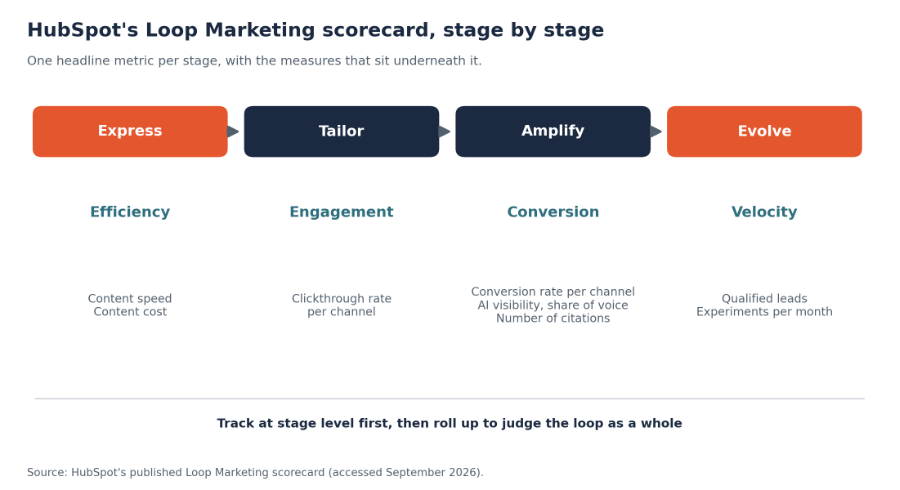
Figure 3: HubSpot’s published Loop Marketing scorecard.
One gap is worth naming: content speed and experiments per month are activity measures. A team can improve both while pipeline stays flat. Pair the stage metrics with pipeline and revenue outcomes, as our Loop Marketing metrics guide sets out.
Seven Mistakes to Avoid
- Running loops before the foundations exist. Without a customer guide, style guide and clean data, the Loop accelerates generic output.
- Treating it as a product purchase. The framework is free; the discipline is the cost.
- Adopting the vocabulary without changing the cadence. Renaming campaigns as loops while still reporting quarterly changes nothing.
- Letting AI volume outpace review. More content in your brand’s rough direction is not the same as more content in your voice.
- Optimizing Express metrics. Content speed and cost are inputs, not outcomes.
- Assuming beta features are stable. Several Loop-mapped tools are in beta; plan for change.
- Ignoring the data bill. Personalization and agents both depend on data work that rarely appears in the business case.
How to Build a Loop Marketing Strategy
- Audit the three foundations honestly before any tooling decision.
- Pick one objective for a first loop, narrow enough to complete in weeks.
- Write the customer guide and style guide as documents your team and your AI tools both work from.
- Fix the data that the objective depends on, rather than the whole CRM at once.
- Run the four stages once end to end, manually where tooling is in beta.
- Measure the stage metrics and one pipeline outcome.
- Decide what to keep, then run the second loop faster.
The detailed method is in how to build a HubSpot Loop Marketing strategy, and the readiness question sits close to our work on campaign management maturity.
THP Studio Perspective
- Our reservation is not with the framework, which is a sensible description of how marketing now works. It is with the sequencing implied by the launch. Loop Marketing is presented alongside a product catalogue, and the foundations that actually determine whether it works, a real point of view and a CRM you can trust, are the parts no licence provides. In our experience, a team with clean data and sharp positioning gets most of the benefit using tools it already owns, while a team without them buys the beta features and produces more forgettable content, faster.
Frequently Asked Questions
Key Takeaways
- Judge Loop Marketing on its diagnosis, which is well evidenced, rather than on its stage names.
- Treat the three foundations as the real project: none of them is something a licence provides.
- Check product names and beta status before planning, because HubSpot’s AI naming has already shifted since launch.
- Expect the Tailor stage to expose CRM data problems rather than solve them.
- Pair HubSpot’s stage metrics with pipeline outcomes, since content speed and experiment counts can rise while revenue does not.
Work With THP’s HubSpot Consulting Practice
- THP’s HubSpot Consulting team works on HubSpot implementation, CRM strategy and marketing automation, which is the layer a framework like this depends on. If you are weighing what Loop Marketing would take in practice, a look at your data and campaign cadence is a sensible first step.
Author